
Cape Coral · Pelican
Roof Repair in Pelican, Cape Coral
Pelican sits in southwest Cape Coral around the Pelican Boulevard corridor, an area known for its network of gulf-access canals and waterfront lots. Many homes here back up to open water or canal frontage, which puts roofs in near-constant contact with humid, salt-tinged air. This page covers roof leaks, storm damage, and inspection considerations for properties in this part of Cape Coral.
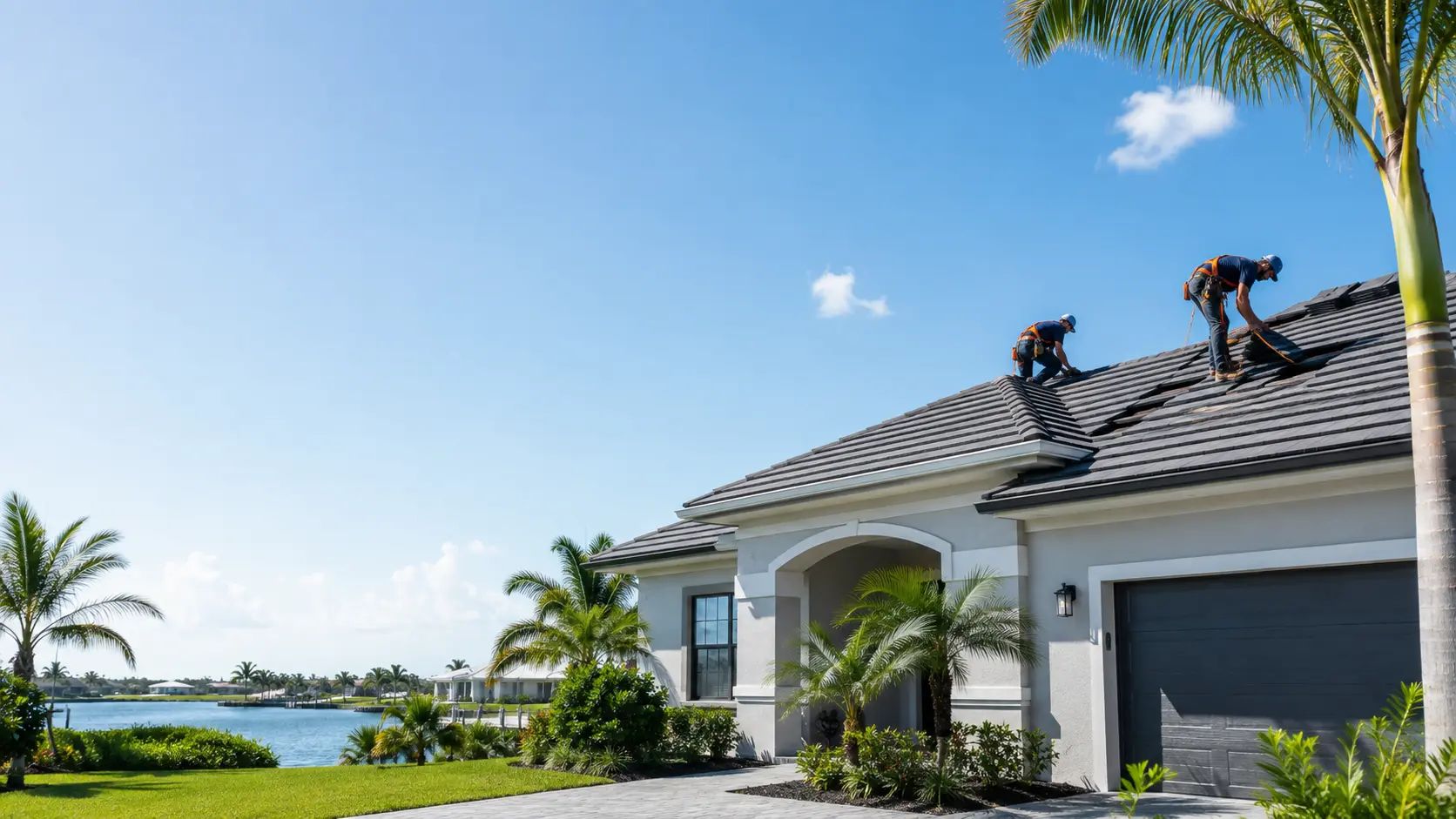
Roofing in a Waterfront Neighborhood
Homes throughout Pelican range from single-story ranch-style houses to larger waterfront properties, many built with tile or architectural shingle roofing. Because the neighborhood is laced with canals leading toward the Caloosahatchee River and the Gulf, roofing materials in this area are regularly exposed to salt-laden air in addition to the typical Southwest Florida sun and rain.
That combination of salt air, humidity, and intense UV exposure can accelerate wear on sealants, flashing, and fasteners over time. Roofs in this part of Cape Coral may show granule loss, curling shingles, or corroding metal components sooner than roofs further inland.
Common Roof Types Near Pelican
Tile roofing is common on many of the larger homes near the canals, while asphalt shingle roofs are found throughout the more established interior streets. Some homes also feature flat or low-slope sections over lanais and additions.
- Concrete and clay tile roofing
- Architectural asphalt shingles
- Flat or low-slope roofing over lanais and additions
- Metal flashing around chimneys, vents, and skylights
Canal-Front Exposure and Roof-Edge Metal
Roofs on canal-front lots take on a distinct wear pattern compared to homes set further back from the water. The metal components along a roof's edges and penetrations, including drip edge, fasteners, gutters, and flashing, are among the first materials to show the effects of salt-tinged air. Even galvanized or coated metal can begin to corrode faster in this environment than the same material would inland.
Drip edge along the roof perimeter helps direct water away from the fascia and into gutters, but corrosion or loosening at this edge can let water track back under shingles or tile. Fasteners exposed to salt air may develop rust streaks or weaken over time, sometimes visible as small orange stains on roofing material below a nail head or screw.
Gutters and downspouts on canal-front homes can also accumulate salt residue and organic debris from nearby vegetation, which affects drainage efficiency if not cleared periodically. Flashing around chimneys, skylights, and roof-to-wall transitions is another area where corrosion can quietly progress before it becomes a visible leak. For canal-front properties, periodic attention to these edge and metal components is a reasonable part of general roof upkeep, since problems in these areas tend to develop gradually rather than all at once.
Roof Leaks Near the Canals
A roof leak in a waterfront home can be harder to trace than it looks, since water often travels along rafters or decking before appearing as a stain on a ceiling. Homes in Pelican with lanai extensions or pool enclosures attached to the main roofline are especially prone to leaks where two roof sections meet.
If a stain, musty smell, or soft spot on a ceiling appears, having the roof looked at before the next heavy rain is generally advisable.
Storm Damage and Wind Exposure
Because Pelican is close to open water, wind-driven rain during storms can push moisture up under shingles or tile edges more aggressively than in sheltered inland areas. Tropical systems moving through Southwest Florida can lift tile, tear shingles, or dislodge flashing along roof edges.
After any storm with sustained wind, a visual check from the ground for missing tiles, shingles, or displaced flashing is a reasonable first step, followed by a professional inspection if anything looks out of place.
Questions & Answers
- Does living near canals affect how often a roof needs attention?
- Salt air and humidity near waterways can speed up wear on roofing materials and metal components, so periodic inspection is a good idea for canal-front homes.
- What roof types are most common in the Pelican area?
- Tile and architectural shingle roofs are both common, with some flat sections over lanais and additions.
- Can a leak near a lanai connection be repaired without replacing the whole roof?
- In many cases, leaks at roof transitions can be addressed with targeted flashing or sealant repair rather than a full replacement, depending on the extent of damage.
- What should be done if tiles are missing after a storm?
- Walking on tile roofing without experience is not advisable, and a professional inspection can assess whether temporary protection like tarping is needed before permanent repairs.
- How does salt air affect roof-edge metal components?
- Drip edge, fasteners, gutters, and flashing near canals can corrode faster than the same materials on inland homes, making periodic visual checks worthwhile.