
Urgent Roof Situations
Emergency Roof Repair in Cape Coral, FL
Some roof problems can wait for a scheduled appointment, and some cannot. When a tree limb punches through decking, a section of roofing tears loose in high wind, or rain is actively pouring into a living space, the priority shifts from full repair to stopping water intrusion as quickly as possible.
What Counts as an Urgent Roof Situation
Not every roof problem needs immediate action, but certain conditions raise the risk of rapid interior damage or safety concerns and are generally treated as higher priority.
- Active water entering a living space during or after a storm
- A visible hole or large missing section of roofing
- A fallen tree limb or debris resting on the roof
- Large sections of roofing material torn loose and flapping in wind
- A partially detached ridge cap or large tile section at risk of falling
First Steps When Damage Is Discovered
Before any repair work begins, safety comes first. Interior areas below active leaks are often protected with buckets or tarps to limit damage to floors and belongings, and electrical fixtures near a leak should be treated with caution until the area is dry.
Photographing visible damage from a safe vantage point, such as a window or from ground level, can be useful for insurance documentation before any temporary covering is placed over the affected area.
Temporary Protection Measures
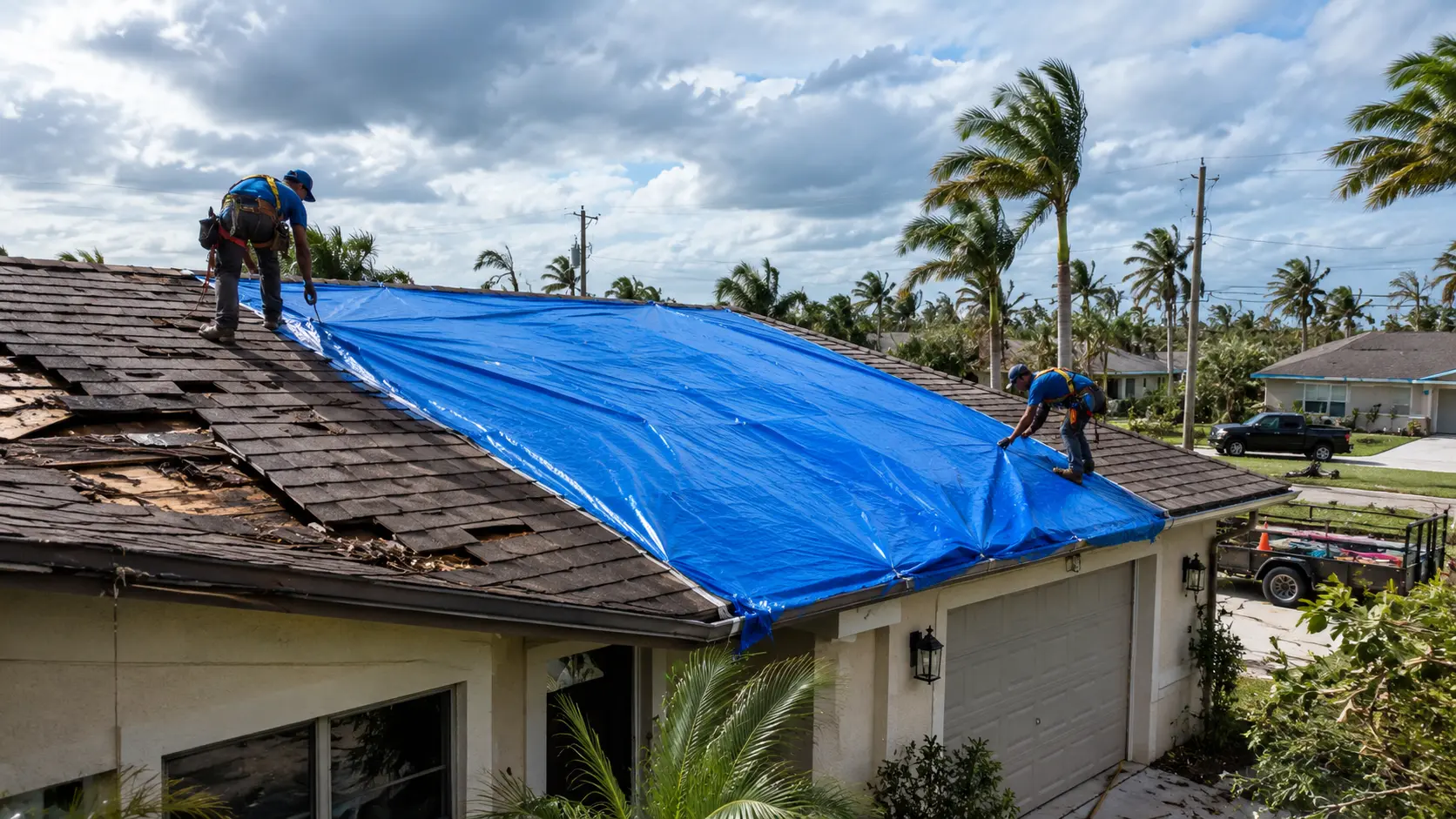
In many urgent situations, the immediate goal is to stop or slow water intrusion rather than complete a permanent repair on the spot. This often takes the form of tarping over the damaged section or covering an exposed opening with weather-resistant material secured to the roof structure.
Temporary protection is meant to buy time, not serve as a long-term fix. It reduces the chance of additional interior damage while a fuller inspection and repair plan is arranged.
Assessing the Full Extent of Damage
Once the immediate risk of water entry is addressed, a closer inspection can determine how far the damage extends. Impact damage, for example, may affect not just the surface layer but also the underlayment or decking beneath it, which changes the scope of repair required.
Moving From Temporary Fix to Permanent Repair
After temporary protection is in place, permanent repair work typically involves replacing damaged roofing material, decking, or flashing and restoring the roof's water-shedding layers in the correct order. The timeline for this step can depend on material availability, weather conditions, and the extent of the damage found during inspection.
Cape Coral Weather and Sudden Roof Damage
Cape Coral's location makes it subject to fast-developing summer storms, lightning, waterspouts, and tropical weather systems during hurricane season. Wind gusts and airborne debris during these events are common triggers for sudden, unplanned roof damage that was not present before the storm.
Working With Insurance After Sudden Damage
Documenting the damage with photos, keeping records of any temporary protection measures, and noting the date and suspected cause of the damage can support a smoother insurance claims process. Temporary protection is often viewed favorably by insurers as a reasonable step to limit further loss.
Questions & Answers
- What should I do first if my roof is actively leaking?
- Move belongings away from the leak, place a container to catch water, and avoid contact with any nearby electrical fixtures. Photograph the damage if it is safe to do so before it is covered.
- Is a tarp a permanent fix for roof damage?
- No. A tarp or temporary cover is meant to reduce water intrusion until a full inspection and permanent repair can be completed. It should be checked periodically for shifting or wear.
- How is damage severity determined after a sudden event?
- An inspection reviews the roof surface, decking, and interior attic space to determine whether damage is limited to the surface layer or extends deeper into the roofing structure.
- Should I climb onto my roof to inspect damage myself?
- Walking on a damaged roof carries fall risk and can worsen the damage, particularly on tile or older shingle roofs. A ground-level or window-based visual check is generally safer.
- Does fallen debris always mean the roof needs replacement?
- Not necessarily. Some impact damage is limited to a small area and can be repaired, while more extensive damage to decking or framing may require a larger repair scope, determined during inspection.
- How quickly should urgent roof damage be addressed?
- Situations involving active water intrusion or structural exposure are generally addressed as soon as reasonably possible to limit interior damage, while minor cosmetic damage can typically wait for a scheduled repair.