
Hurricane Recovery
Hurricane Roof Damage Repair in Cape Coral, FL
Cape Coral sits directly in a hurricane-prone corridor of Southwest Florida, and even storms that pass at a distance can bring sustained winds, torrential rain bands, and tornado-spawning outer squalls strong enough to damage a roof. Recovering from a hurricane often means working through a roof methodically rather than reacting to the first visible sign of trouble.
How Hurricanes Damage Roofs
Hurricane-force and tropical-storm-force winds create sustained pressure differences across a roof surface, with the strongest uplift forces concentrated at edges, corners, and ridgelines. Combined with hours of wind-driven rain, this can lead to a wide range of damage types across a single roof.
- Shingles or tiles peeled back or removed entirely from wind uplift
- Underlayment exposed to prolonged rain once surface roofing is gone
- Flashing torn away from chimneys, walls, or roof-to-roof transitions
- Impact damage from wind-borne debris such as branches or loose items
- Soffit and fascia damage from wind pressure at roof edges
- Ponding or backup on flat or low-slope roof sections after heavy rainfall
Assessing Damage After a Hurricane Passes
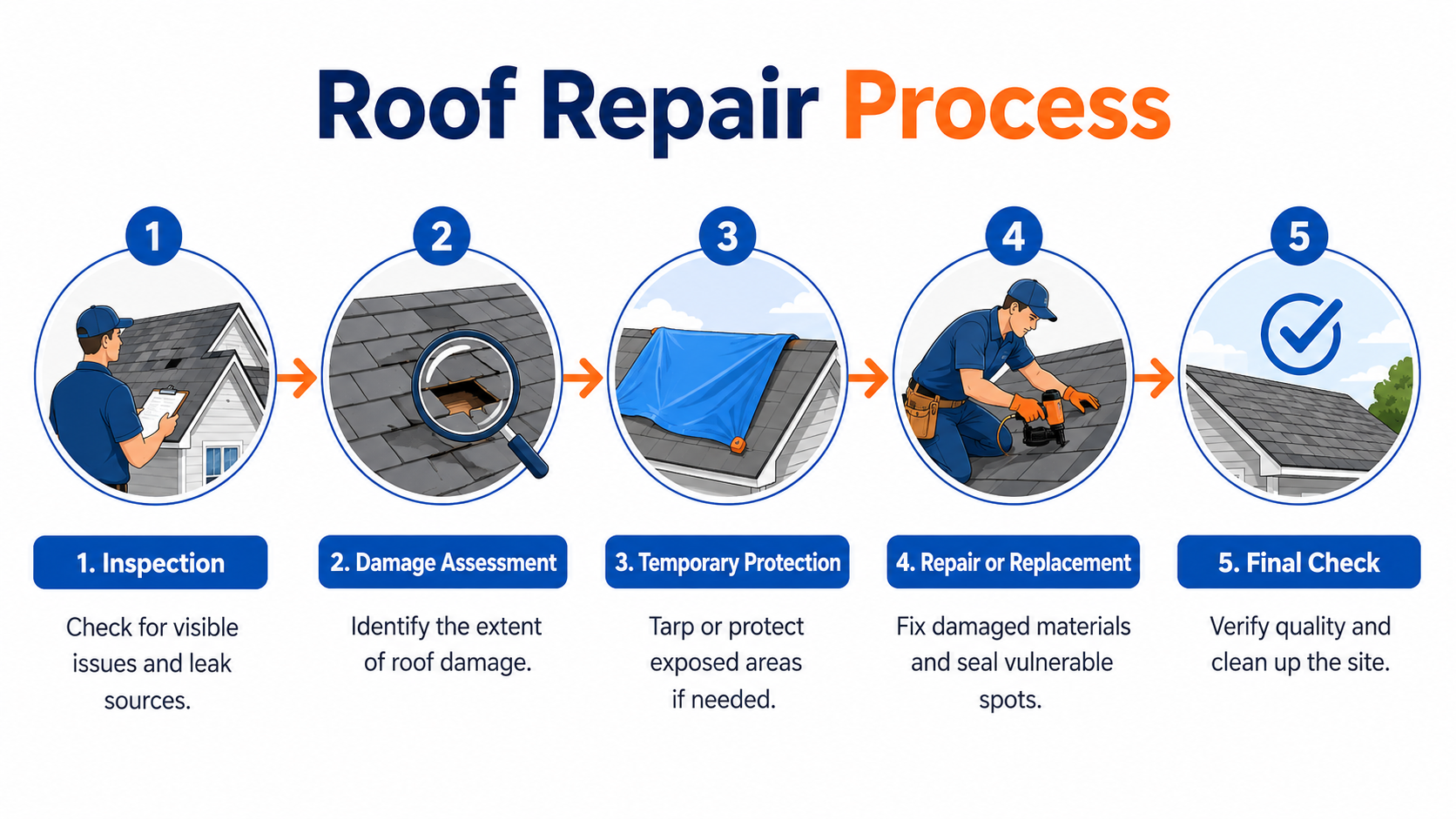
Once conditions are safe, a roof assessment after a hurricane typically starts from the ground, looking for missing material, sagging areas, or debris on the roof, before a closer surface inspection is carried out. Interior attic spaces are checked for water intrusion, staining, or daylight coming through gaps that were not present before the storm.
Because hurricane conditions can cause damage in multiple locations at once, an assessment after a major storm is generally more thorough than a routine inspection, covering the full roof surface, all penetrations, and edge details rather than a single trouble spot.
Prioritizing Repairs After Widespread Damage
When damage is extensive, repair work is often prioritized by risk: areas with active water intrusion or exposed decking are typically addressed first with temporary protection, followed by structural repairs to framing or decking if needed, and finally restoration of the roofing surface itself.
Temporary Protection During Recovery Periods
In the aftermath of a hurricane, material and scheduling availability across a region can affect how quickly permanent repairs happen. Tarping or other temporary coverings are commonly used to protect exposed sections of a roof during this period, reducing further water damage while a full repair plan is arranged.
Cape Coral's Hurricane Exposure
Cape Coral's flat, low-lying terrain and canal-laced layout do not reduce wind exposure the way tree cover or elevation might elsewhere. Roofs here can be exposed to the full force of tropical system winds, and the region's building stock spans decades of different roofing codes and materials, meaning damage patterns can vary significantly from one home to the next after the same storm.
Roof Material and Hurricane Vulnerability
Older shingle roofs installed before more recent wind-resistance standards may be more prone to shingle blow-off. Tile roofs depend heavily on secure fastening and underlayment condition, since a single dislodged tile can expose the underlayment to wind and rain. Metal roofing is generally rated for higher wind resistance but can still suffer damage at seams, fasteners, and trim pieces during extreme events.
Coordinating Repair With Insurance Documentation
Given the scale of damage a hurricane can cause, thorough documentation matters. Photographs from multiple angles, a written record of the inspection findings, and dated notes on any temporary protection measures all help support an insurance claim tied to a named storm event.
Questions & Answers
- How is hurricane damage different from regular storm damage?
- Hurricane conditions typically involve prolonged high winds and heavy rain across a wider area, which can produce more extensive and varied damage across a roof compared to a shorter, localized thunderstorm.
- Is it safe to inspect my own roof after a hurricane?
- A ground-level visual check is generally safer than climbing onto the roof, especially given possible hidden structural damage. A closer inspection is best left until conditions and the roof itself are confirmed stable.
- What should be done if a large section of roofing is missing?
- The exposed area is typically covered with a temporary protective layer to limit water intrusion until a full repair can be completed, and the interior below should be checked and protected from dripping water.
- How long does hurricane roof repair typically take?
- Timelines vary widely based on the extent of damage, material availability, and regional demand following a storm, since many homes may need repair at the same time.
- Does a hurricane always require a full roof replacement?
- Not necessarily. Some roofs sustain isolated damage that can be repaired, while others suffer damage extensive enough that full replacement becomes more practical, which an inspection can help clarify.
- Should older roofs be checked before hurricane season each year?
- A pre-season inspection can help identify loose material, aging flashing, or other vulnerabilities that might worsen under hurricane-force wind and rain.