
Storm Recovery
Hurricane Roof Damage Guide for Cape Coral, FL
After a hurricane or tropical storm, roof damage isn't always obvious from inside the home. This guide covers how to check for damage safely from the ground, what to look for, and when a professional inspection may be the appropriate next step.
Safety comes first
Before assessing any storm damage, take stock of conditions around the property. Downed power lines, standing water, and debris create serious hazards after a storm, and a damaged roof structure may not be able to safely support a person's weight even if it looks intact from a distance.
- Do not climb onto a roof that has visible or suspected storm damage
- Stay away from any downed or sagging power lines and report them to the utility company
- Avoid walking through standing water near the home, which can hide electrical hazards or debris
- Wait until weather conditions are fully clear and surfaces have dried before doing any ground-level walk-around
- Watch for loose or hanging materials that could fall from the roof edge
Conducting a ground-level visual check
Most of what you need to know after a storm can be observed safely from the ground using binoculars if needed, or by looking from upstairs windows. Walk the perimeter of the home and look up at the roofline, paying attention to changes in color, texture, or shape compared to what you remember before the storm.
- Missing shingles, tiles, or metal panels leaving bare patches of decking exposed
- Shingles or tiles that appear lifted, curled, or out of alignment
- Visible dents or creases in metal roofing panels
- Debris such as branches or roofing material fragments in the yard or on the roof itself
- Sagging areas of the roofline that weren't present before the storm
- Displaced or damaged flashing around chimneys, vents, or roof edges
Checking gutters, soffits, and fascia
Storm damage often shows up in the roof's edge components before it's visible on the main roof surface. Look for gutters pulled away from the fascia, dented or clogged gutters, and soffit panels that have come loose or been punctured by wind-blown debris. These components help direct water away from the home, so damage here can contribute to future water intrusion if left unaddressed.
Signs of water intrusion inside the home
Interior signs can appear even when exterior damage isn't obvious. After a storm, walk through the home and check ceilings, walls, and the attic (if it can be accessed safely) for new staining, discoloration, or musty odors. A ceiling stain that wasn't there before a storm is often one of the first indicators that water has found a way past the roofing system.
- New or spreading water stains on ceilings or upper walls
- Peeling paint or bubbling drywall texture
- Musty smells in rooms near the roofline or attic
- Visible light coming through the attic roof deck
- Damp insulation in the attic
Documenting the damage
Photographs and notes taken soon after a storm can be useful for insurance purposes and for giving a roofing contractor a clear picture of what changed. When documenting, include wide shots of the whole roofline as well as closer photos of specific areas of concern, and note the date the damage was observed.
- Take wide-angle photos of each side of the roof from the ground
- Photograph any debris on the roof or in the yard that may have caused damage
- Note interior water stains with photos and the date first noticed
- Keep a written log if new issues appear over the following days
Temporary protection for exposed areas
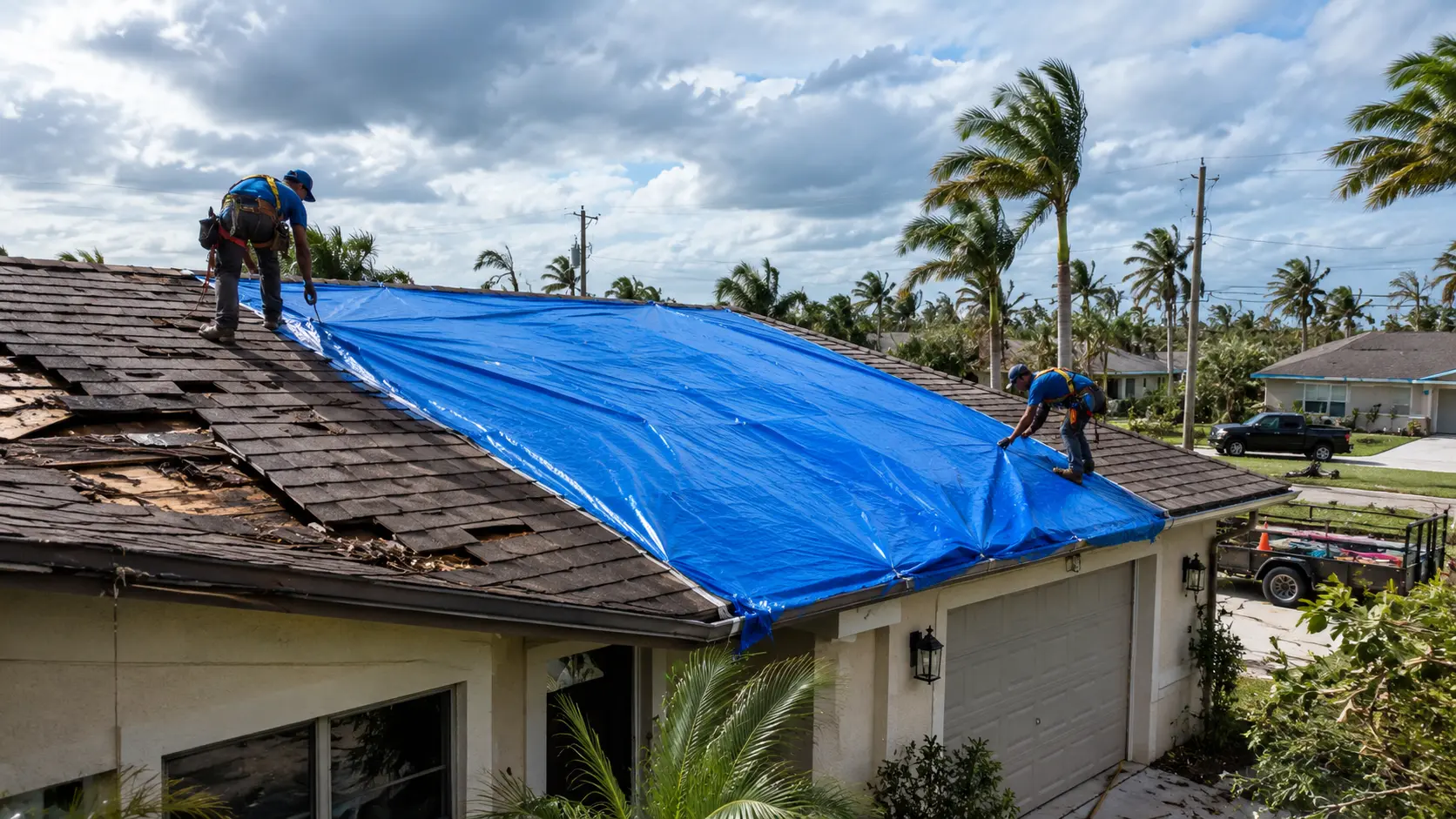
If a section of roofing has been blown off or severely damaged, temporary protection such as a tarp may be used to reduce further water intrusion until a permanent repair can be made. Tarping is generally considered a short-term measure and is typically installed by someone experienced in working safely on damaged roof surfaces.
When a professional inspection may help
Because storm damage can affect layers of the roof system that aren't visible — including underlayment and decking — a professional inspection can help confirm the extent of damage beyond what's visible from the ground. This is particularly relevant if you've noticed any interior water signs, missing materials, or damage that appears to extend across a larger portion of the roof.
Questions & Answers
- Is it safe to check my roof for damage myself after a hurricane?
- You can safely observe your roof from the ground or through windows, but climbing onto a roof after storm damage isn't recommended due to structural and safety risks.
- What should I photograph after storm damage?
- Wide shots of each roof side, close-ups of visible damage, debris that may have caused it, and any interior water stains, along with the date observed.
- How long can a tarp stay on a damaged roof?
- Tarps are intended as a temporary measure while a permanent repair is arranged; they are not a long-term roofing solution.