
Shingle Roofing
Shingle Roof Repair in Cape Coral, FL
Asphalt shingles remain one of the most common roofing materials on Cape Coral homes, valued for their straightforward installation and repair process. But shingles are also directly exposed to sun, heat, and wind, and Florida's climate can accelerate wear patterns that would take longer to develop in cooler regions.
Common Types of Shingle Damage
Shingle roofs tend to fail in recognizable patterns, and identifying which pattern is present helps determine the right repair approach.
- Curling or cupping shingles, often from age and heat exposure
- Cracked shingles, sometimes from thermal expansion and contraction
- Missing shingles or tabs following wind events
- Granule loss leaving shingles looking patchy or bald
- Blistering from trapped moisture beneath the shingle surface
- Algae or dark streaking, which is cosmetic but can indicate moisture retention
Why Shingles Wear Faster in Florida Heat
Asphalt shingles rely on oils within the material to stay flexible. Intense, prolonged sun exposure common in Cape Coral can dry out these oils faster than in cooler climates, leading to brittleness, cracking, and granule loss over time. Daily heat cycling between hot afternoons and cooler nights also causes repeated expansion and contraction that stresses shingle edges and seams.
How a Shingle Roof Inspection Is Conducted
An inspection typically involves walking the roof surface where safe to do so, checking shingle edges for lifting or cracking, examining valleys and flashing points for wear, and reviewing the attic for signs of moisture intrusion beneath damaged sections. Close attention is often paid to ridge caps and rake edges, which experience some of the highest wind exposure on a shingle roof.
Repairing Individual Shingles vs. Larger Sections
When damage is isolated, individual shingles can often be removed and replaced without disturbing the surrounding roof. This involves lifting the overlapping shingle course, removing fasteners from the damaged shingle, and sliding a replacement into place with new sealant and fasteners.
When damage covers a broader section, such as after sustained wind exposure, repair may involve replacing a larger patch of shingles along with the underlayment beneath them to ensure a consistent, uniform seal across that section of roof.
Matching Replacement Shingles
Because shingle color can fade unevenly with sun exposure, replacement shingles on an older roof may not match perfectly right away, though weathering over time typically reduces the contrast. When exact matches are unavailable, the closest reasonable match is generally used for the repaired section.
Flashing and Sealant Considerations
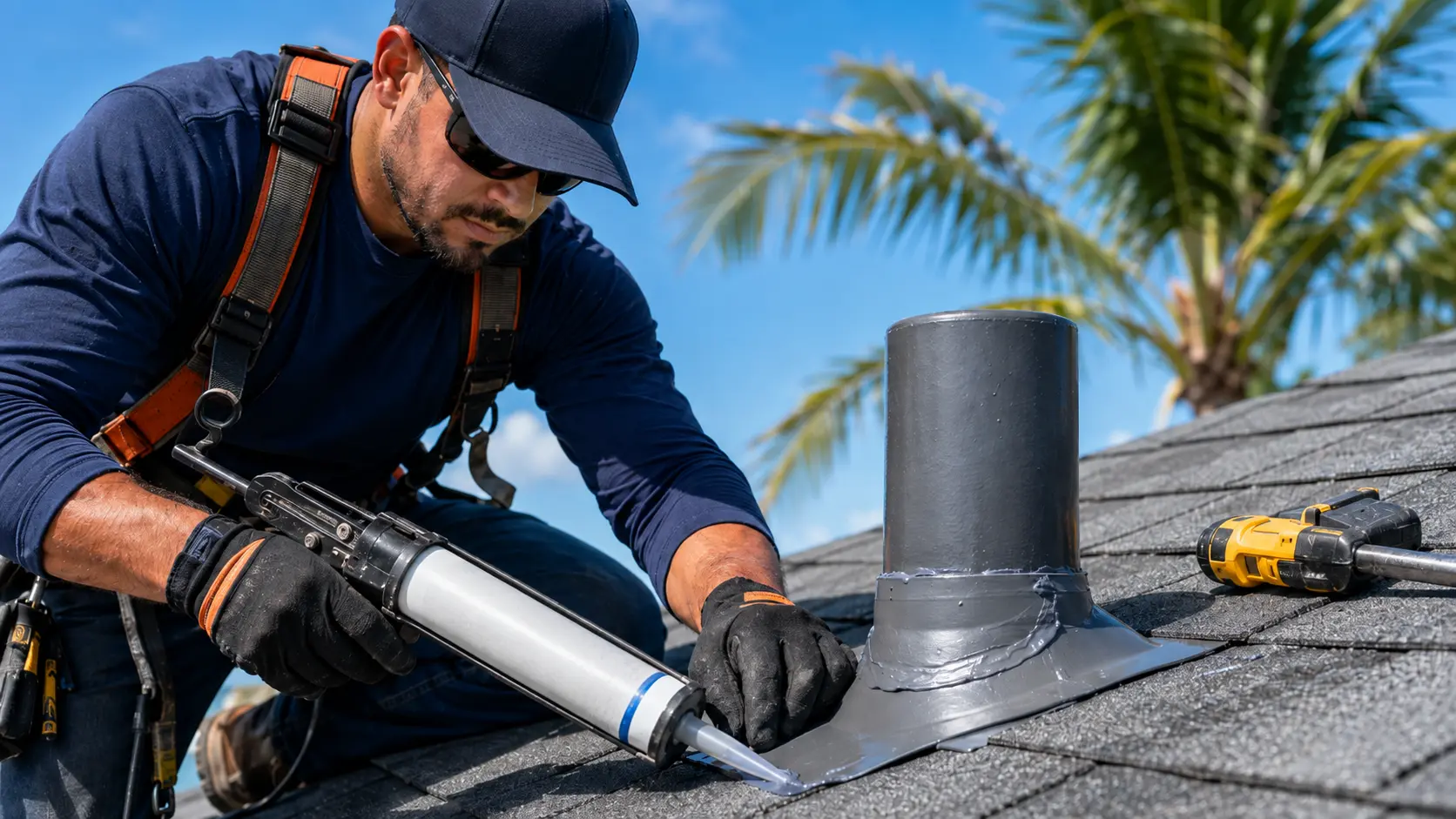
Shingle roof leaks are frequently linked to failed flashing or sealant around penetrations rather than the shingles themselves. Repair work on a shingle roof often includes checking and, when needed, resealing or replacing flashing around vents, chimneys, and roof-to-wall transitions as part of addressing the underlying issue.
When Shingle Repair May Point to Bigger Issues
Widespread curling, brittleness, or granule loss across most of the roof can indicate the shingles are approaching the end of their service life rather than dealing with an isolated defect. In these cases, an inspection can help clarify whether targeted repairs are sufficient or whether a larger portion of the roof warrants attention.
Questions & Answers
- How long do asphalt shingles typically last in Cape Coral's climate?
- Service life varies by shingle quality, installation, and sun exposure, but Florida's intense UV and heat can shorten typical lifespans compared to cooler regions, making periodic inspection worthwhile.
- Can a single missing shingle really cause a leak?
- Yes. A missing shingle exposes the underlayment directly to sun and rain, and without the shingle's protective layer, water can penetrate more easily, especially during heavier rainfall.
- Will repaired shingles match the rest of my roof exactly?
- Sun fading over time can make an exact match difficult, particularly on older roofs. The closest available match is typically used, and color differences often become less noticeable as the new shingles weather.
- Are curling shingles always a sign of a problem?
- Curling can result from age, heat exposure, or underlying attic ventilation issues. Isolated curling may be repairable, while widespread curling across the roof may suggest broader wear.
- What causes granule loss on shingles?
- Granule loss can result from age, hail impact, foot traffic, or normal weathering. Some loss is expected over a shingle's lifespan, but heavy or sudden loss may indicate damage worth inspecting.
- Does shingle repair require matching underlayment work?
- In many isolated repairs, only the shingle course needs replacement, but if the underlayment beneath a damaged area has also been compromised, that layer may need repair as well to maintain a watertight roof.