
Flashing Repair
Roof Flashing Repair in Cape Coral, FL
Flashing is the thin metal or composite material installed at roof transitions, edges, and penetrations to direct water away from vulnerable seams. Because these joints are where two roofing sections meet, or where a roof meets a wall or chimney, flashing is consistently one of the most common sources of roof leaks. Roof flashing repair focuses on resealing, resecuring, or replacing flashing that has failed at these transition points.
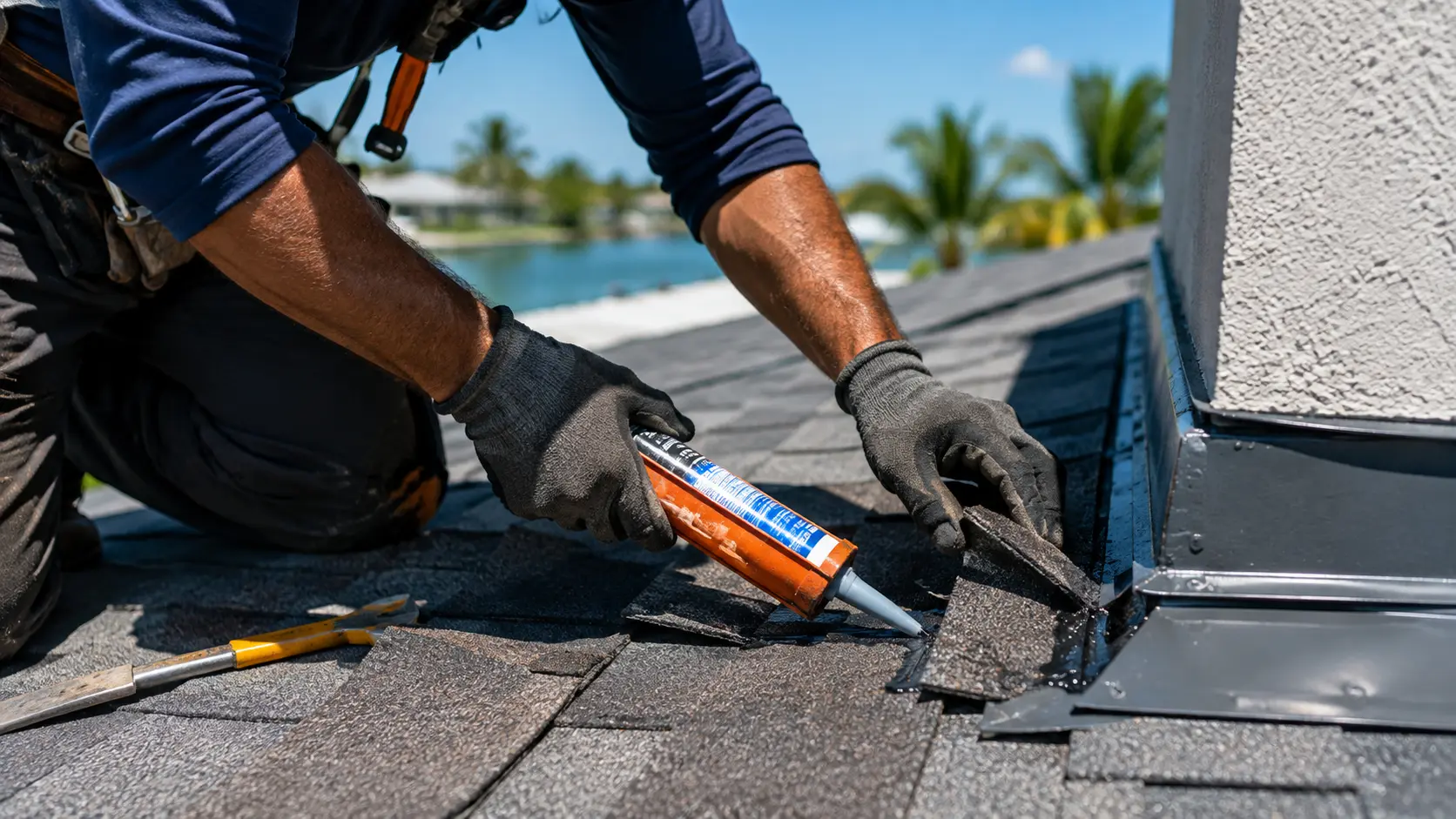
Where Flashing Problems Typically Develop
Flashing is installed at nearly every point where the roof plane changes direction or meets another structure, which makes it a frequent leak point across almost any roof type.
- Roof valleys where two slopes meet
- Chimney bases and sidewalls
- Where a roof meets a vertical wall (step flashing)
- Around skylights and roof vents
- Drip edges along roof perimeters
Signs Flashing May Need Repair
Flashing damage is not always obvious from ground level, but several indicators often point to a flashing issue rather than a problem with the field roofing material itself.
- Water stains on interior walls near a chimney or where two roof lines meet
- Visibly rusted, bent, or lifted metal flashing
- Cracked or missing sealant along flashing edges
- Leaks that appear during wind-driven rain but not calm rainfall
Common Causes of Flashing Failure
Flashing failure often develops gradually. Sealant used at flashing seams can dry out and crack under sustained sun exposure, while metal flashing can corrode over time, particularly in coastal air with higher salt content. Physical movement of the roof structure, foot traffic during other maintenance, or improper original installation can also loosen flashing from its intended position.
High winds during storms can lift flashing edges that were only lightly secured, creating a gap that allows water entry during the next rain event.
What a Flashing Inspection May Examine
An inspection focused on flashing typically reviews each transition point on the roof individually rather than assessing the roof only as a whole.
- Condition and adhesion of sealant at each flashing joint
- Corrosion or physical damage to metal flashing components
- Proper overlap and shingle or tile integration around flashing
- Evidence of past water intrusion near flashing locations
Repair Methods for Damaged Flashing
Repair approaches vary depending on the extent of the damage. Minor sealant failures may be addressed by removing old, cracked sealant and applying fresh material designed for exterior roofing use. More significant issues, such as corroded or bent flashing, typically call for removing the damaged section and installing new flashing material integrated properly with the surrounding roofing.
Cape Coral's Coastal Climate and Flashing
Cape Coral's coastal, humid environment can accelerate corrosion on metal flashing compared to inland climates, and intense UV exposure adds stress to sealants used at flashing joints. Storm season wind events add another layer of risk, since gusts can work at loosely secured flashing edges over time.
Questions & Answers
- How do I know if a leak is coming from flashing rather than the roof material itself?
- Leaks near chimneys, skylights, or roof valleys often point to flashing rather than the shingles or tiles themselves, since these are transition points where separate materials meet. An inspection can trace water staining back to the specific flashing location involved.
- Can flashing be repaired without replacing the whole roof?
- In most cases, yes. Flashing repair is typically a localized process that addresses the specific transition point involved, without requiring work on the broader roofing field, unless the surrounding material has also sustained damage.
- Why does flashing corrode faster near the coast?
- Salt-laden coastal air can accelerate oxidation on metal flashing compared to inland environments, particularly for flashing made from lower-grade materials or that has thin protective coatings.
- Is sealant alone enough to fix a flashing leak?
- Sealant can address minor gaps or aging material, but it is not a substitute for replacing flashing that is physically corroded, bent, or improperly installed. An inspection can determine whether sealant or full flashing replacement is the appropriate approach.
- How often should flashing be checked?
- Since flashing issues are not always visible from the ground, periodic roof inspections that specifically include flashing review, especially after storms, can help catch problems before they lead to interior water damage.