
Cape Coral · Burnt Store
Roof Repair in the Burnt Store Area, Cape Coral
The Burnt Store Road corridor in north and northwest Cape Coral has seen significant newer development, with many homes built more recently than in the city's older southern neighborhoods. Even newer roofs need attention over time, and this page covers leak, storm damage, and general maintenance considerations relevant to this growing area.
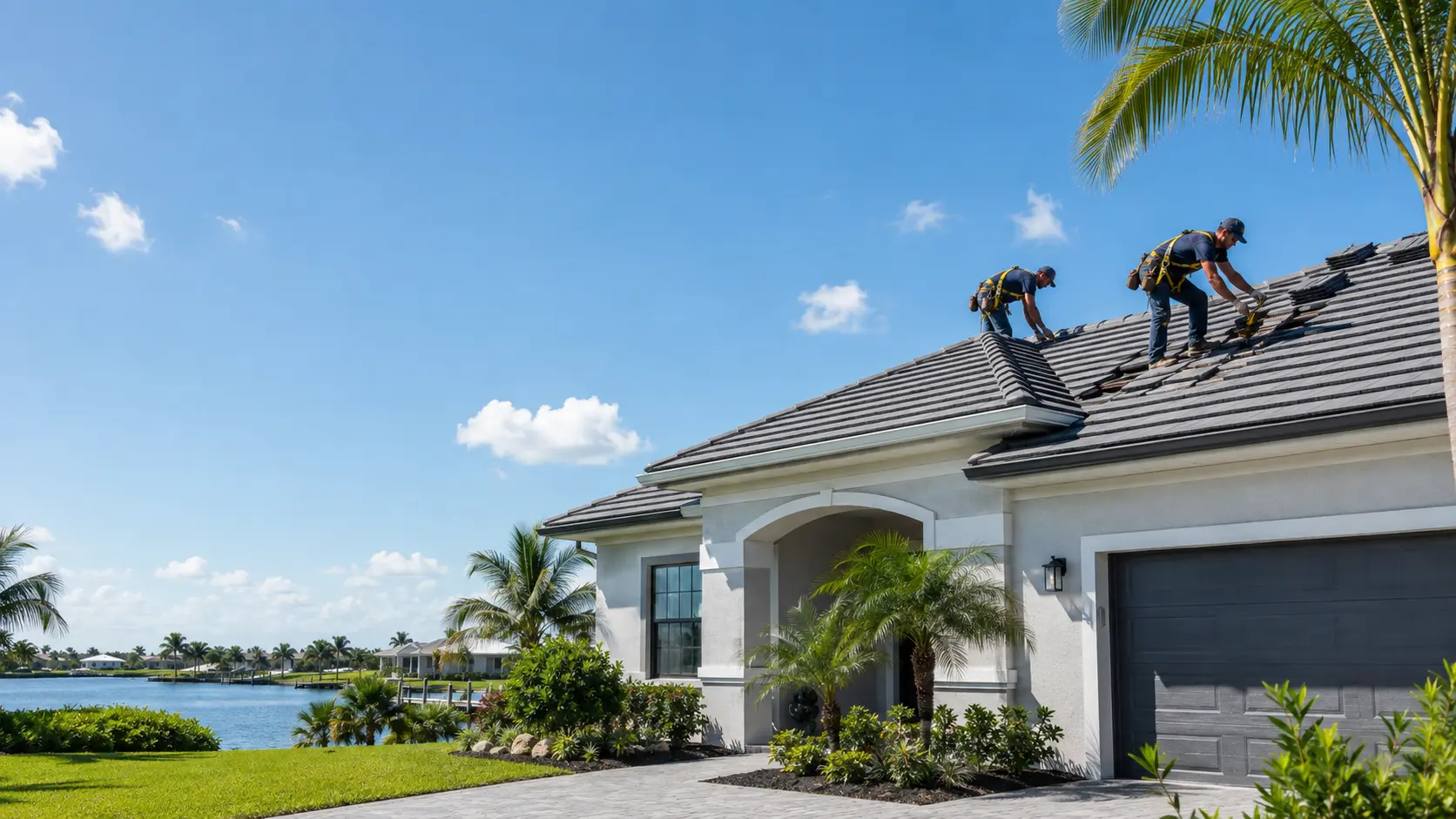
A Growing, Newer-Built Corridor
The Burnt Store corridor has grown substantially in recent years, and much of the housing stock reflects more recent construction standards, including tile and architectural shingle roofing installed under current building codes. That doesn't mean these roofs are immune to problems.
New construction still faces the same Southwest Florida conditions as older neighborhoods: long stretches of intense sun, seasonal heavy rain, and the occasional tropical system, all of which can affect roofing materials over time.
Roofing on Newer Homes
Homes built in the Burnt Store area in recent years commonly feature roofing designed to meet updated wind and water resistance standards.
- Concrete or clay tile roofing
- Architectural asphalt shingles
- Metal roofing on some homes and additions
- Modern flashing and underlayment systems
How Newer Roof Assemblies Fail Differently
Roofs built under more recent codes are engineered around different assumptions than older systems, which changes the kinds of problems that tend to show up. Modern tile and shingle installations often rely on improved fastening patterns, synthetic underlayment, and sealed ridge and hip details designed to resist wind uplift more effectively than older methods.
When something does go wrong on a newer roof, the cause is more often an isolated installation detail than widespread material breakdown. A small gap left around a penetration, a fastener that missed solid decking, or a section of sealant that didn't cure properly can create a leak point even though the rest of the roof is performing as intended. This is different from an older roof, where a single visible issue can be a symptom of broader, age-related deterioration across the whole surface.
Newer synthetic underlayments and improved flashing details also tend to hold up better against humidity and UV exposure in the short term, but they aren't immune to damage from foot traffic during installation of other trades, debris impact during storms, or manufacturing defects. Because newer roofs look sound and often are structurally sound, problems can be easy to overlook until a leak becomes visible indoors, which is why periodic checks are still worthwhile even on recent construction.
Why Newer Roofs Still Develop Leaks
Even a roof installed within the last several years can develop a leak, often due to a small installation gap, a damaged vent boot, or debris that has worked its way under a tile or shingle edge. Because newer roofs typically look sound from the ground, homeowners sometimes overlook a developing issue until a stain appears on a ceiling.
Periodic inspection, even on a relatively new roof, can catch small issues before they lead to interior damage.
Storm Damage on Newer Construction
While newer roofing systems are generally built to withstand strong winds, no roof is entirely immune to damage during a significant tropical storm or hurricane. Loose debris, wind-driven rain, and heavy gusts can still lift shingles or tiles or push moisture into vulnerable spots like ridge caps and flashing.
After a storm, a visual check for missing or displaced roofing material is worthwhile even on a newer home.
Questions & Answers
- Do newer roofs in Burnt Store still need inspections?
- Yes, even recently built roofs can develop small issues like loose flashing or damaged vent boots that benefit from periodic inspection.
- What roofing materials are common in newer Burnt Store homes?
- Tile, architectural shingles, and some metal roofing are common on newer construction throughout the area.
- Can a leak happen on a roof that's only a few years old?
- Yes, leaks can develop from small installation gaps or damaged components even on newer roofs.
- Should a roof be checked after a tropical storm even if it looks fine?
- A visual inspection after significant wind events is a reasonable precaution, since some damage isn't visible from the ground.
- Why do newer roofs fail differently than older ones?
- Newer roofs are more likely to have isolated installation-related issues, while older roofs may show widespread age-related wear alongside a visible problem.