
How It Works
The Roof Repair Process, Step by Step
Understanding the general stages of a roof repair can help you know what to expect and what questions to ask along the way. While every project is different, most repairs move through the same general sequence described below.
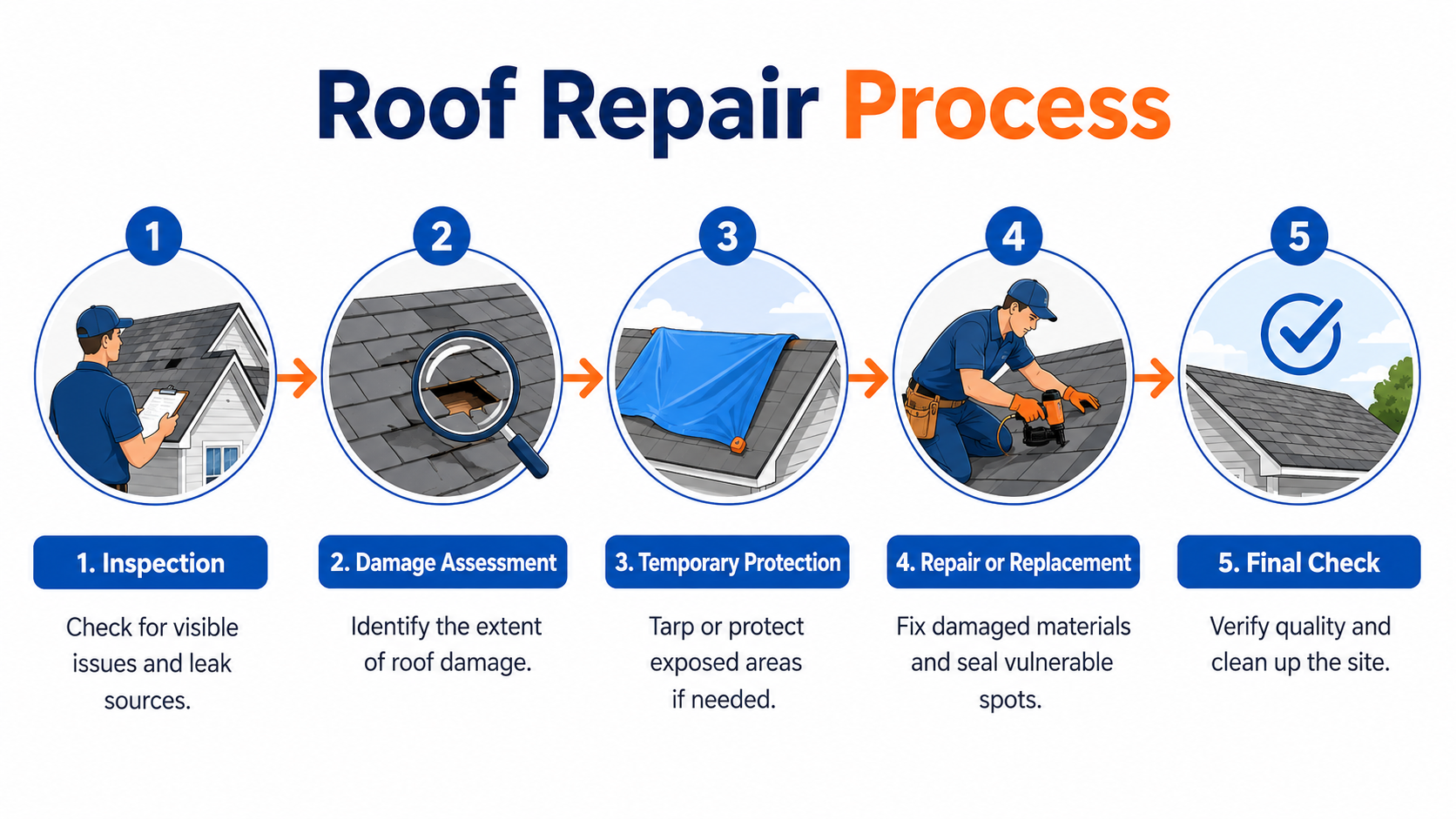
1. Inspection
The process typically begins with a visual inspection of the roof, both from the surface and, where relevant, from inside the attic. This stage is about gathering information: identifying the roofing material and its general condition, locating visible damage, and checking related components such as flashing, vents, gutters, and penetrations that might be contributing to a problem.
A thorough inspection also considers the roof's history and any patterns that might indicate a source, such as staining that appears in a particular location after certain weather conditions. On sloped roofs this may involve a physical walk-of-roof where it's safe to do so; on more sensitive or damaged surfaces, inspection may rely more on ground-level observation, ladder access at the eaves, and interior/attic checks.
2. Damage assessment
Once initial observations are made, the next stage is assessing the scope of the damage in more detail. This goes beyond simply noting that a leak exists — it involves determining how far the damage extends, whether it affects just the surface roofing material or has reached the underlayment or decking, and whether the cause is isolated (such as a single failed pipe boot) or part of a broader issue (such as widespread wear across an aging roof section).
This stage often produces the information needed for a written estimate, since the extent of damage directly affects what materials and labor will be required. If decking has been compromised, this is typically identified and documented at this point so it can be factored into the repair plan.
3. Temporary protection (when needed)
If the roof has an active opening — for example, following storm damage or during a repair that will take place over more than one day — temporary protection may be put in place to reduce the chance of further water intrusion. This commonly takes the form of a tarp secured over the affected area. Temporary protection is meant to bridge the gap until permanent repair materials and labor can be scheduled, not to serve as a long-term fix.
4. Repair or replacement
This is the stage where the actual repair work takes place. Depending on the assessment, this might involve replacing individual shingles or tiles, resealing or replacing flashing, repairing or replacing sections of decking, resealing penetrations, or addressing gutter and soffit components tied to the issue. The specific materials and techniques used depend on the roofing system in place, since tile, shingle, metal, and flat/low-slope roofs each call for different repair methods.
Where decking has been affected, this is generally addressed before new roofing material is installed over the area, since roofing material installed over compromised decking will not perform as intended.
5. Final check
After repair work is completed, a final check is typically performed to confirm the repaired area is properly sealed and integrated with the surrounding roofing material. This may include a visual check of the finished work from the roof surface, confirmation that flashing and seals are secure, and a check from inside the attic in cases where the original leak had reached that far.
This stage is also an opportunity to review the work performed and address any remaining questions about what was found and what was done to resolve it.
Questions & Answers
- How long does the process from inspection to repair usually take?
- Timelines vary depending on the extent of damage, material availability, and scheduling, so it's best discussed directly based on your specific situation.
- Is temporary protection always needed?
- No. Temporary protection like tarping is typically used only when there's an active opening exposing the interior of the home to further water intrusion.
- What happens if damaged decking is found during the repair?
- Compromised decking is generally repaired or replaced before new roofing material is installed, since it provides the structural base for the roof surface.