
Temporary Roof Protection
Roof Tarping in Cape Coral, FL
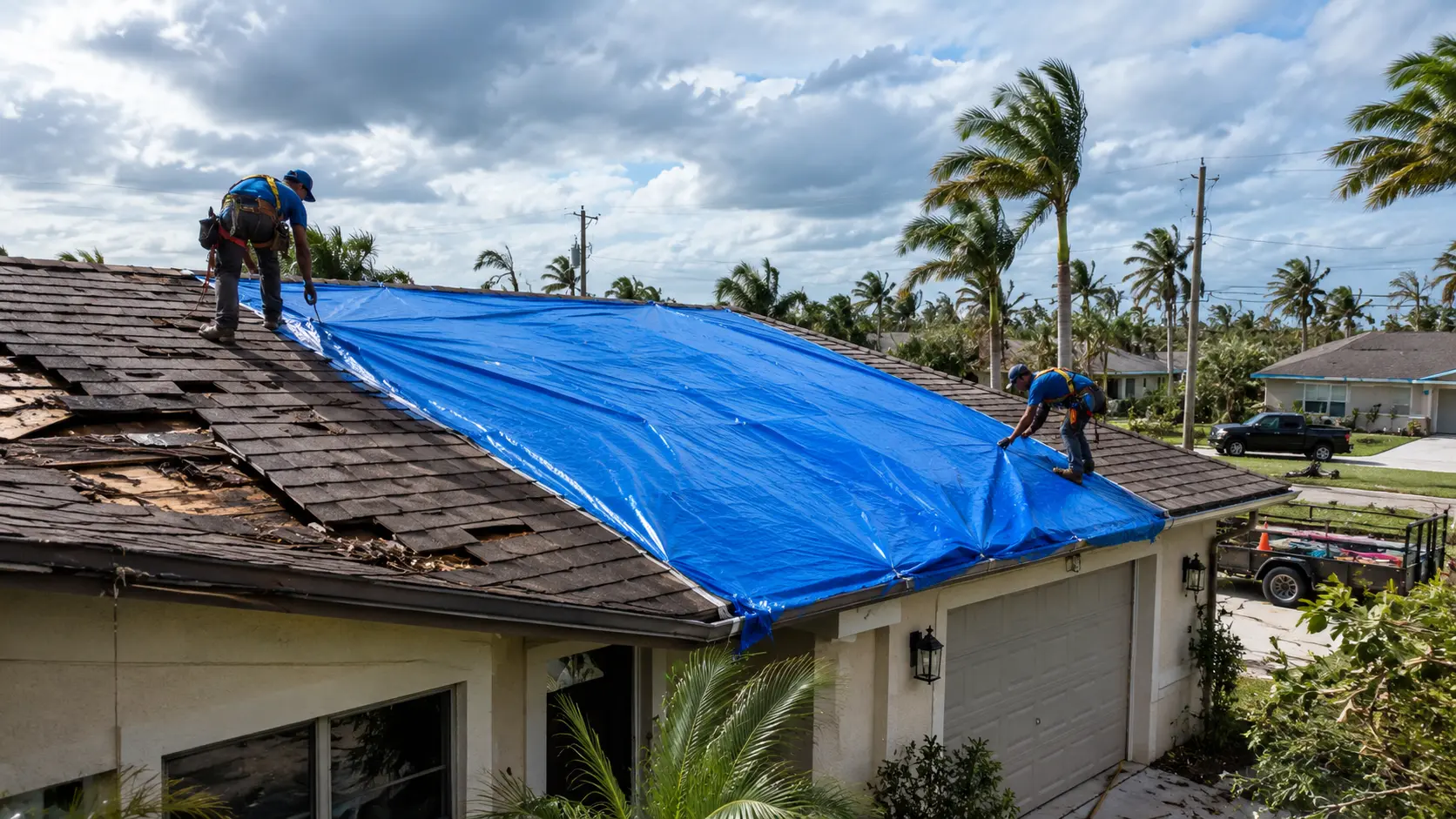
When a roof sustains sudden damage from a storm, fallen tree limb, or a hole that opens up unexpectedly, a tarp can provide a temporary barrier against rain while a longer-term repair plan is arranged. Roof tarping is not a permanent fix, but a properly installed tarp can reduce the amount of water that reaches the interior of a Cape Coral home in the days following damage.
When Roof Tarping Is Typically Used
Tarps are most often installed after an event that leaves a roof section exposed, rather than as a routine maintenance step. Situations where a tarp may be considered include storm damage that strips shingles or tile, a fallen branch that punctures the roof deck, or a section of flashing that has blown loose and left an opening.
- Missing shingles or tiles exposing the underlayment or deck
- Wind or impact damage from a storm
- A hole or puncture from fallen debris
- Active leaking with rain in the forecast
How a Roof Tarp Is Installed
Proper tarp installation involves more than draping material over a damaged area. Coverage typically extends past the damaged section onto surrounding sound roofing, since wind-driven rain can travel sideways under an undersized tarp.
Boards or battens are commonly used to secure the tarp edges without relying solely on adhesives or nails driven directly through the tarp material, which can create new puncture points. The goal is a covering that stays anchored through wind and rain until repair work can begin.
What an Inspection Before Tarping May Examine
Before a tarp goes on, it helps to understand the full extent of the damage so the covering is sized and positioned correctly.
- Size and location of the compromised roof area
- Roof deck condition beneath the damaged covering
- Nearby areas at risk of secondary damage
- Safe anchor points for securing tarp material
Roof Tarps and Cape Coral's Storm Season
Cape Coral's hurricane season brings the highest likelihood of sudden roof damage, from tropical storm winds to falling debris carried by gusts. Tarping demand tends to rise after these events as homeowners look to limit interior damage while contractors and insurance processes catch up with repair scheduling.
Outside of storm season, roof tarping can still be relevant after isolated incidents such as a fallen tree limb during a summer thunderstorm.
Tarping Considerations by Roof Type
Shingle roofs generally accept tarp anchoring along existing roof lines fairly directly. Tile roofs require more care, since walking on tile and anchoring a tarp can risk breaking additional tiles if not done thoughtfully. Metal roofing panels present a smoother surface that can make tarp securement more challenging without proper technique.
Moving from Temporary Tarp to Permanent Repair
A tarp is intended as a short-term measure. Once a tarp is in place, scheduling a full inspection and repair plan helps ensure the underlying damage is properly addressed rather than left covered indefinitely, since prolonged tarp use can still allow gradual moisture intrusion at the edges.
Questions & Answers
- How long can a tarp stay on a roof?
- A tarp is meant as a temporary measure, generally intended to last days to a few weeks depending on material quality and weather exposure. Extended use increases the chance of wind wear and edge leaks, so permanent repair should be scheduled as soon as reasonably possible.
- Will a tarp stop all leaking during a storm?
- A properly installed tarp can significantly reduce water intrusion, but wind-driven rain and prolonged storms can still find their way past temporary coverings. Tarping reduces damage risk but is not a guaranteed complete seal.
- Can a tarp be installed on a tile roof without breaking more tiles?
- Tile roofs require careful foot placement and anchoring technique, since walking directly on tiles can crack them. Tarping over tile is typically done with attention to weight distribution and existing tile damage already present.
- Is roof tarping covered by insurance?
- Many homeowner insurance policies consider temporary protective measures like tarping as part of mitigating further damage, but coverage details vary by policy. Reviewing the specific policy or contacting the insurer directly is recommended for coverage questions.
- What happens if a tarp is not installed after damage?
- Leaving damage uncovered can allow rain to continue entering the structure, potentially leading to worsening interior damage, mold growth, and insulation saturation, all of which can increase the scope of eventual repair work.