
Cape Coral · Surfside
Roof Repair Along Surfside Boulevard, Cape Coral
The Surfside area follows the Surfside Boulevard corridor in southwest Cape Coral, home to a largely newer collection of single-family houses. Newer construction generally means more consistent roofing materials and installation practices, but that doesn't eliminate the need for repairs when storms, sun exposure, or isolated defects take their toll.
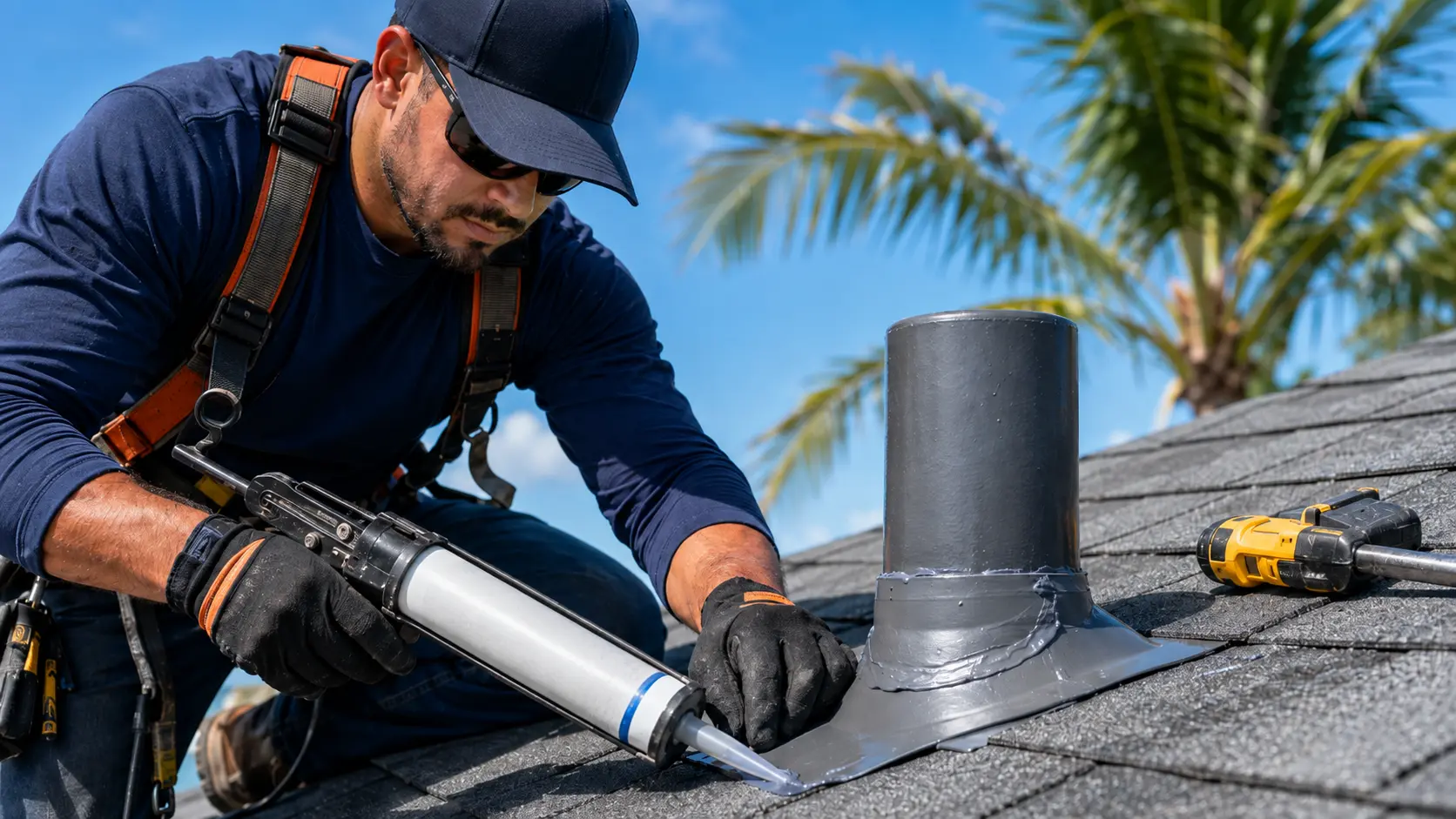
Newer Homes, Common Roof Types
Along Surfside Boulevard, dimensional asphalt shingle roofs are common, with some homes also featuring tile roofing. Newer roofs benefit from more current materials and installation standards, but issues can still surface around flashing, vent boots, and roof-to-wall transitions.
Because many of these homes were built within a similar timeframe, roofs in the area may share similar wear patterns as they age together.
Sun, Rain, and Storm Exposure
This part of southwest Cape Coral sees the same intense sun and heat as the rest of the region, along with a seasonal wet period that brings heavy afternoon rain and the potential for tropical systems later in the year. Even well-installed roofing can degrade gradually under prolonged UV exposure.
Wind-driven rain during storms is a common way water finds its way into homes, particularly around less obvious points such as roof vents, skylights, or flashing seams.
Roof Leak Repair
On newer roofs, leaks are often linked to isolated issues rather than widespread wear — a single damaged shingle, a gap in flashing, or a vent boot that has begun to crack can all be enough to let water in.
- Isolated shingle damage from wind or debris
- Cracked pipe boots and vent seals
- Flashing gaps at roof-to-wall junctions
- Water intrusion around skylights
How Newer Roof Assemblies Age
Because Surfside is one of the newer developed areas in southwest Cape Coral, most roofs here are still relatively early in their expected service life. Newer shingle and tile installations generally benefit from more current manufacturing standards and installation techniques, but that does not mean they are exempt from the normal aging process that all roofs go through.
Early signs of wear on a newer roof tend to show up in a handful of predictable spots rather than across the whole surface. Sealant around vent boots and pipe penetrations is often among the first material to degrade, since rubber and plastic components break down under UV exposure faster than shingles or tiles themselves. Flashing at roof-to-wall junctions and chimney bases can also loosen slightly as a house settles, creating small gaps where water can enter during wind-driven rain.
Granule loss on shingles is another early indicator, though on a newer roof it usually appears first in high-exposure areas such as south- and west-facing slopes. Because these issues tend to be isolated rather than widespread on newer construction, periodic inspection can catch them while they remain minor and easy to address.
Storm Damage Repair
After storms move through the Surfside area, it's worth checking for missing shingles, dented vent caps, or debris impact damage. Addressing these issues early can prevent a minor repair from becoming a larger one after the next heavy rain.
Questions & Answers
- Do newer roofs in Surfside still need regular inspections?
- Yes. Even newer roofs benefit from periodic inspection, since isolated issues like a cracked vent boot or storm damage can occur regardless of a roof's age.
- What roofing materials are common along Surfside Boulevard?
- Dimensional asphalt shingles are the most common choice in this area, with tile roofing found on some homes as well.
- How quickly should storm damage be repaired?
- Prompt repair is generally recommended, since even minor storm damage can allow water intrusion during the next rain event if left unaddressed.
- Can a small leak around a skylight be repaired without replacing the skylight?
- In many cases, resealing or repairing the flashing around a skylight resolves the leak without needing to replace the skylight itself.
- What are signs my roof was affected by wind-driven rain?
- Watch for ceiling stains appearing shortly after a storm, particularly near roof valleys, vents, or skylights, which can indicate water pushed in by wind.