
Cape Coral · Cape Harbour
Roof Repair in Cape Harbour, Cape Coral
Cape Harbour sits along the waterfront in southwest Cape Coral, built around its marina village with a mix of single-family homes and multi-story residential buildings. Being close to open water brings a distinct set of considerations for roofing, from salt-laden air to the wind exposure that comes with waterfront living.
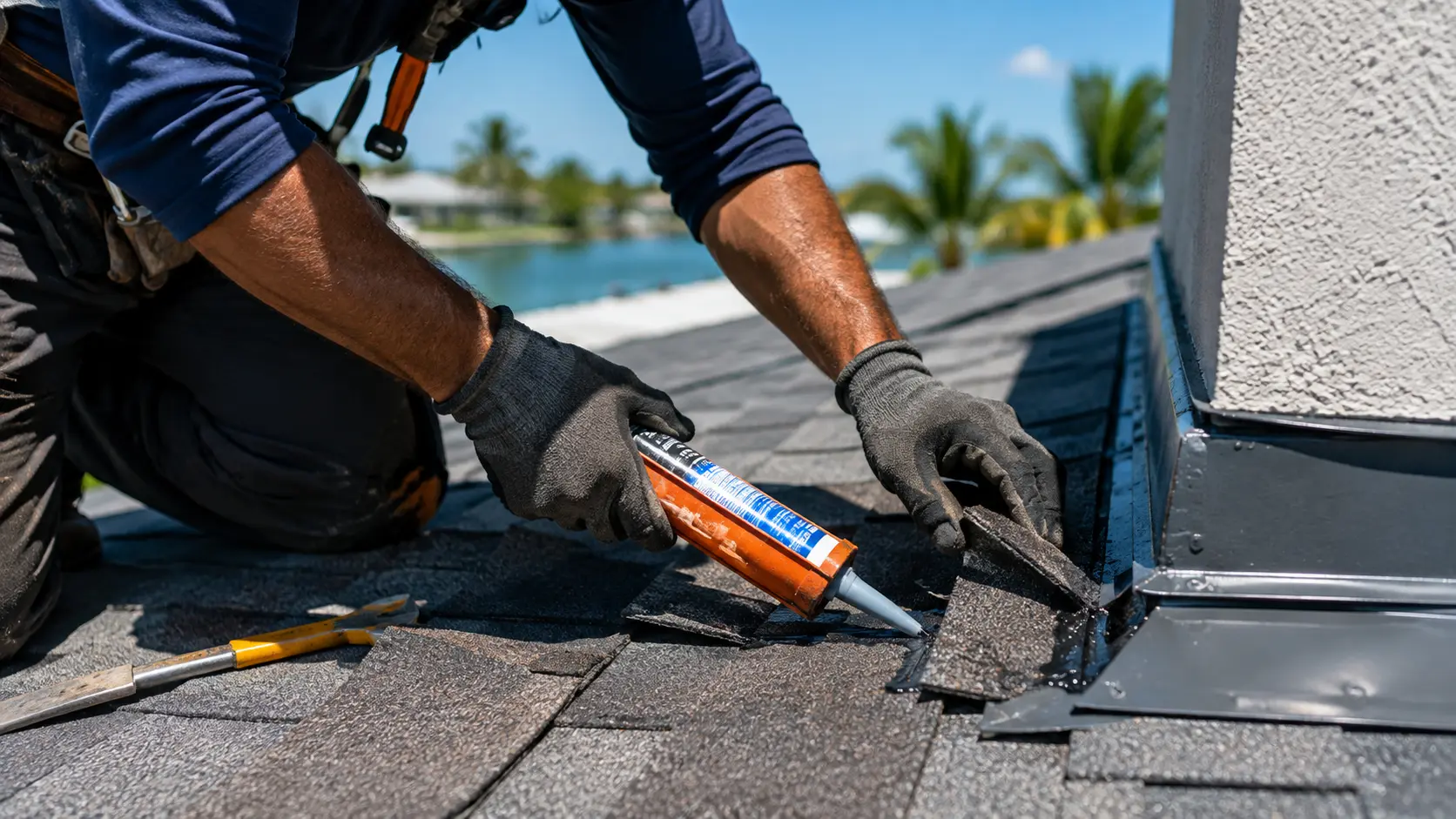
A Waterfront Mix of Roof Types
The properties in and around Cape Harbour include single-family homes with shingle or tile roofs as well as multi-story residential buildings that may use flat or low-slope roofing systems. Each roof type has different vulnerabilities, but proximity to the water is a shared factor worth accounting for.
Flat and low-slope roofs on multi-story buildings require attention to drainage and membrane condition, while sloped residential roofs are more commonly affected by shingle or tile wear.
Salt Air and Wind Exposure
Homes and buildings near the water can be exposed to salt-laden air, which over time may accelerate corrosion of metal roofing components such as fasteners, flashing, and vent caps. Regular inspection of these metal parts can help catch early corrosion before it leads to a leak.
Waterfront areas can also experience more direct wind exposure during storms, including wind-driven rain that tests the durability of flashing and roof-to-wall seals.
Roof Leak Repair
On sloped residential roofs, leaks are often linked to worn flashing, damaged shingles or tiles, or failed vent seals. On flat or low-slope roofs common to multi-story buildings, leaks more frequently stem from membrane seams, drain issues, or ponding water.
- Corroded or loosened metal flashing near the waterline exposure
- Membrane seam separation on flat roof sections
- Cracked or lifted shingles and tiles
- Clogged or damaged roof drains on flat roofs
Marina Setting and Low-Slope Roofing Systems
Cape Harbour's mix of a waterfront marina village and multifamily residential buildings means low-slope and flat roofing systems appear here more often than in typical single-family neighborhoods. These systems rely on membrane materials, seams, and drainage points rather than the shingles or tiles used on pitched roofs, so they age and fail in different ways.
On a pitched residential roof, water is shed quickly by gravity and problems tend to concentrate around flashing and penetrations. Flat and low-slope roofs instead depend on a continuous waterproof membrane and properly functioning drains or scuppers, since water can sit on the surface for a period after rainfall. Ponding water, membrane seam separation, and blocked drainage are the issues most specific to this roof type.
Multi-story buildings near the marina also often combine sections of flat roofing with sloped elements over stairwells or entries, creating transition points where two different roofing systems meet. These transitions are common locations for leaks to develop, since they require careful flashing work to tie a membrane roof into an adjoining sloped surface.
Storm Damage Repair
Because Cape Harbour is positioned along open water, storms can bring stronger wind gusts and wind-driven rain than in more inland parts of the city. After a storm, checking for lifted roofing material, damaged flashing, and standing water on flat roof sections is a reasonable first step before scheduling repairs.
Questions & Answers
- Does living near the water affect how often my roof needs repair?
- Salt air exposure can accelerate wear on metal roofing components, so waterfront properties may benefit from more frequent inspections compared to homes further inland.
- Are flat roofs common in Cape Harbour?
- Flat or low-slope roofing is common on multi-story residential buildings in the area, while single-family homes typically use sloped shingle or tile roofs.
- What causes leaks on a flat roof?
- Flat roof leaks are often related to membrane seam failures, ponding water, or clogged drains rather than the shingle or tile issues seen on sloped roofs.
- How can salt air corrosion be identified on a roof?
- Look for rust or discoloration on metal flashing, vent caps, or fasteners, as these are usually the first components affected by salt exposure.
- Should I have my roof checked after a coastal storm?
- Yes, waterfront properties can experience stronger wind and rain during storms, so a post-storm inspection is a reasonable precaution.