
Roof Ventilation
Roof Vent Repair in Cape Coral, FL
Roof vents play a dual role: they allow attic ventilation that helps regulate temperature and moisture, while also creating a penetration point through the roofing material that must be properly sealed. Plumbing stack vents, attic exhaust vents, and ridge vents are all common features on Cape Coral roofs, and each can develop its own set of issues over time as boots, seals, and caps age.
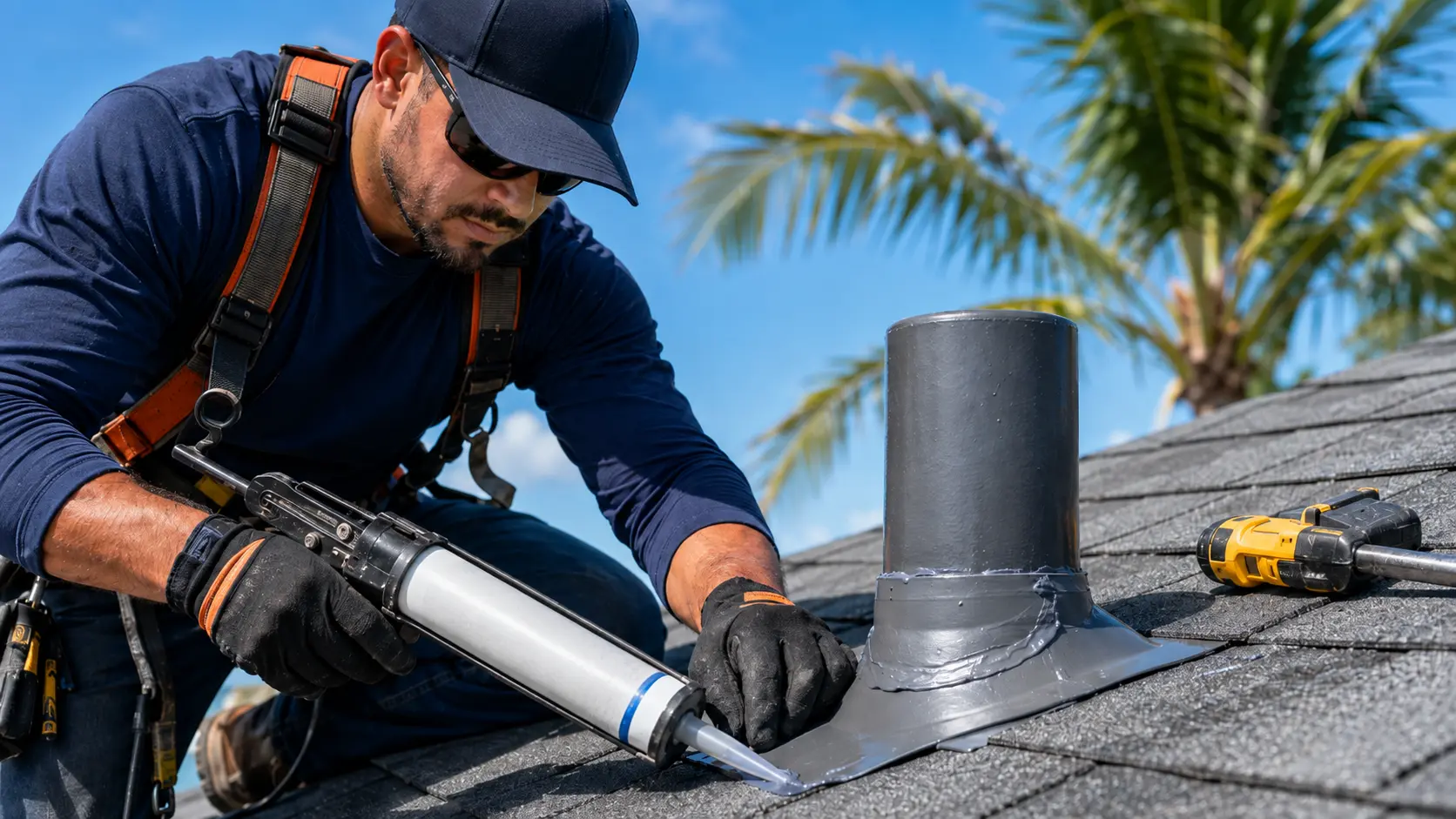
Types of Roof Vents on Cape Coral Homes
Most homes have several types of vents integrated into the roofing system, each serving a specific ventilation function.
- Plumbing stack vent boots, which seal around pipes exiting the roof
- Static attic vents, which allow passive airflow
- Powered attic ventilators, which use a fan to move air
- Ridge vents, installed along the roof peak
- Soffit vents, which work alongside roof vents for airflow circulation
Signs a Roof Vent Needs Attention
Vent-related leaks often present as isolated, localized stains rather than widespread ceiling damage, since the water entry point is typically a single small opening around a pipe or vent base.
- Cracked or dried-out rubber boot around a plumbing vent pipe
- Rust or physical damage on a metal vent cap
- Water stains on the ceiling directly below a vent location
- Visible daylight around a vent penetration from inside the attic
- Unusually high attic temperatures suggesting inadequate ventilation
Why Vent Boots Fail Over Time
The rubber or plastic collar sealing a plumbing vent pipe is among the shorter-lived materials on a roof. Continuous UV exposure gradually dries and cracks the rubber, reducing its ability to flex and maintain a tight seal against the pipe.
Metal vent caps and flashing collars can also loosen due to fastener corrosion or minor shifting of the surrounding roofing material, particularly on older installations.
What a Vent Inspection May Examine
A thorough look at roof vents typically covers both the exterior penetration and, where accessible, the interior attic side of the same vent.
- Condition and flexibility of rubber or plastic vent boot material
- Fastener and flashing integrity around the vent base
- Attic-side inspection for daylight, staining, or moisture near penetrations
- General attic airflow and any signs of excess heat or condensation
Repairing Vents Versus Replacing Attic Ventilation Components
Many vent repairs involve replacing a single failed boot or cap rather than reworking the entire ventilation system. Repair work typically includes removing the damaged component, reintegrating new flashing material with the surrounding shingles or tiles, and resealing the transition to restore a watertight penetration.
In cases where attic ventilation itself appears inadequate, such as insufficient airflow contributing to heat buildup, additional or upgraded vents may be considered as part of a broader ventilation review.
Cape Coral Heat and Vent Longevity
Cape Coral's long stretches of intense sun exposure place extra stress on rubber and plastic vent components compared to cooler climates, often shortening the practical lifespan of vent boots. Humidity and heat inside an inadequately ventilated attic can also compound over a Florida summer, making functioning vents especially relevant to interior comfort as well as roof health.
Questions & Answers
- Why do vent boots crack?
- Rubber vent boots are constantly exposed to intense sun and heat, which causes the material to dry out and crack over years of exposure. Once cracked, the boot no longer forms a tight seal around the pipe, allowing water to enter during rainfall.
- How can I tell if a leak is coming from a roof vent?
- Vent leaks often create a small, localized ceiling stain directly beneath the vent's location rather than a widespread area of damage. Comparing the interior stain location to the roof layout can help identify whether a vent is the likely source.
- Does poor attic ventilation cause roof damage?
- Inadequate attic ventilation can trap heat and moisture, which may accelerate shingle aging from below and contribute to condensation issues. Proper vent function supports both roof material longevity and attic air quality.
- Can a single cracked vent boot be replaced without other roof work?
- In most cases, yes. Vent boot replacement is typically a localized repair that does not require broader roofing work, provided the surrounding shingles or tiles were not also damaged by the leak.
- How often should vent boots be checked?
- Because rubber boots degrade gradually from UV exposure, periodic roof inspections that include a check of all vent penetrations can help catch cracking before it leads to an active leak.